Japanese A5 Wagyu Miyazaki Block Cut New York Strip
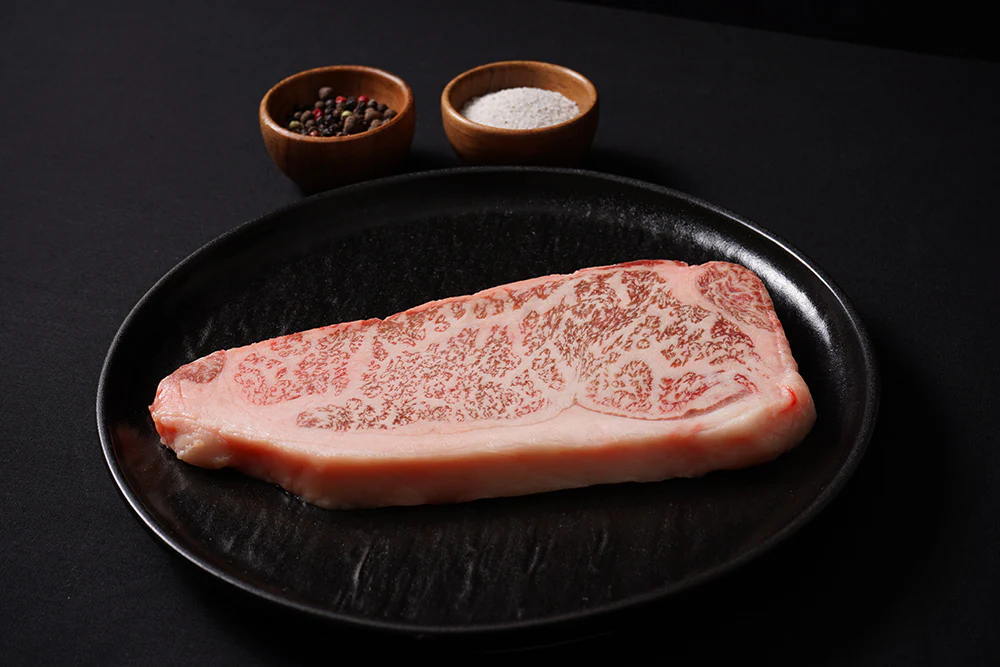
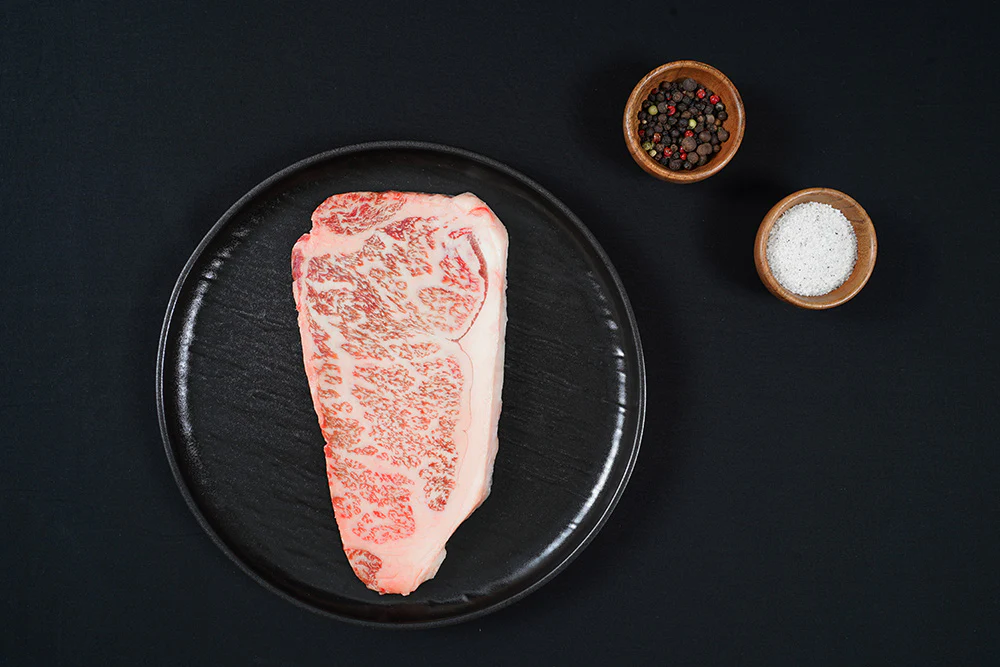
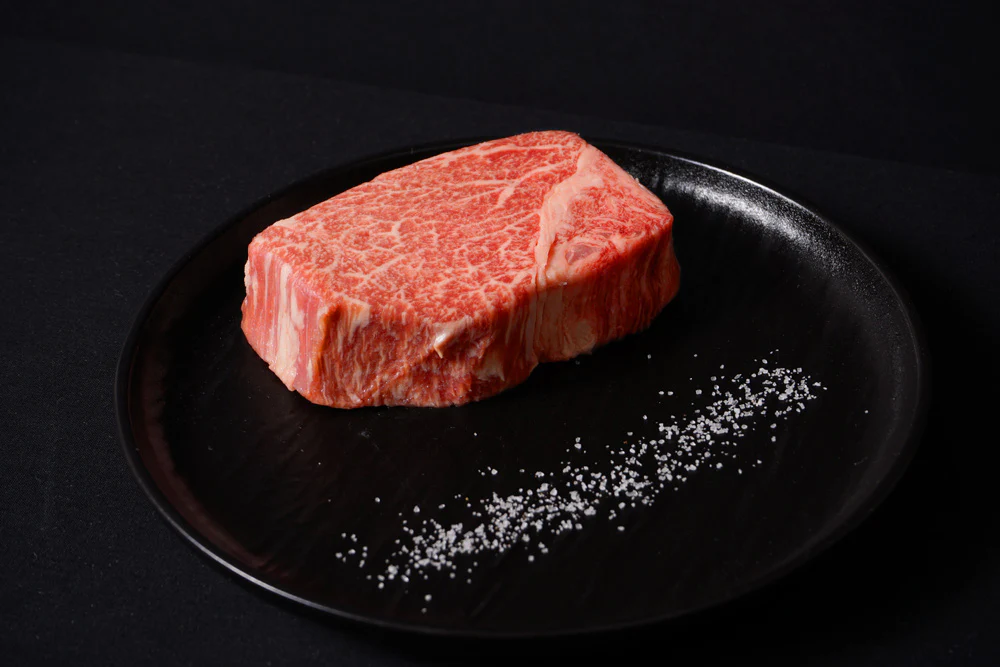
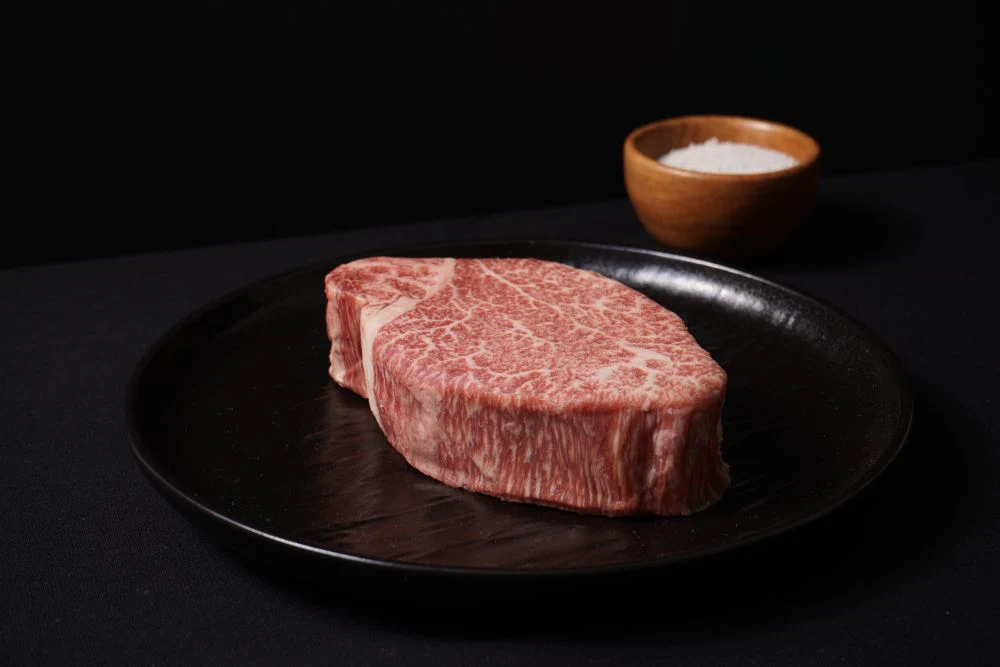
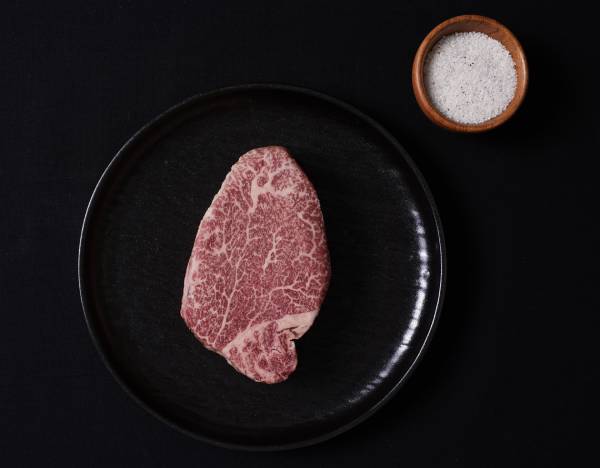
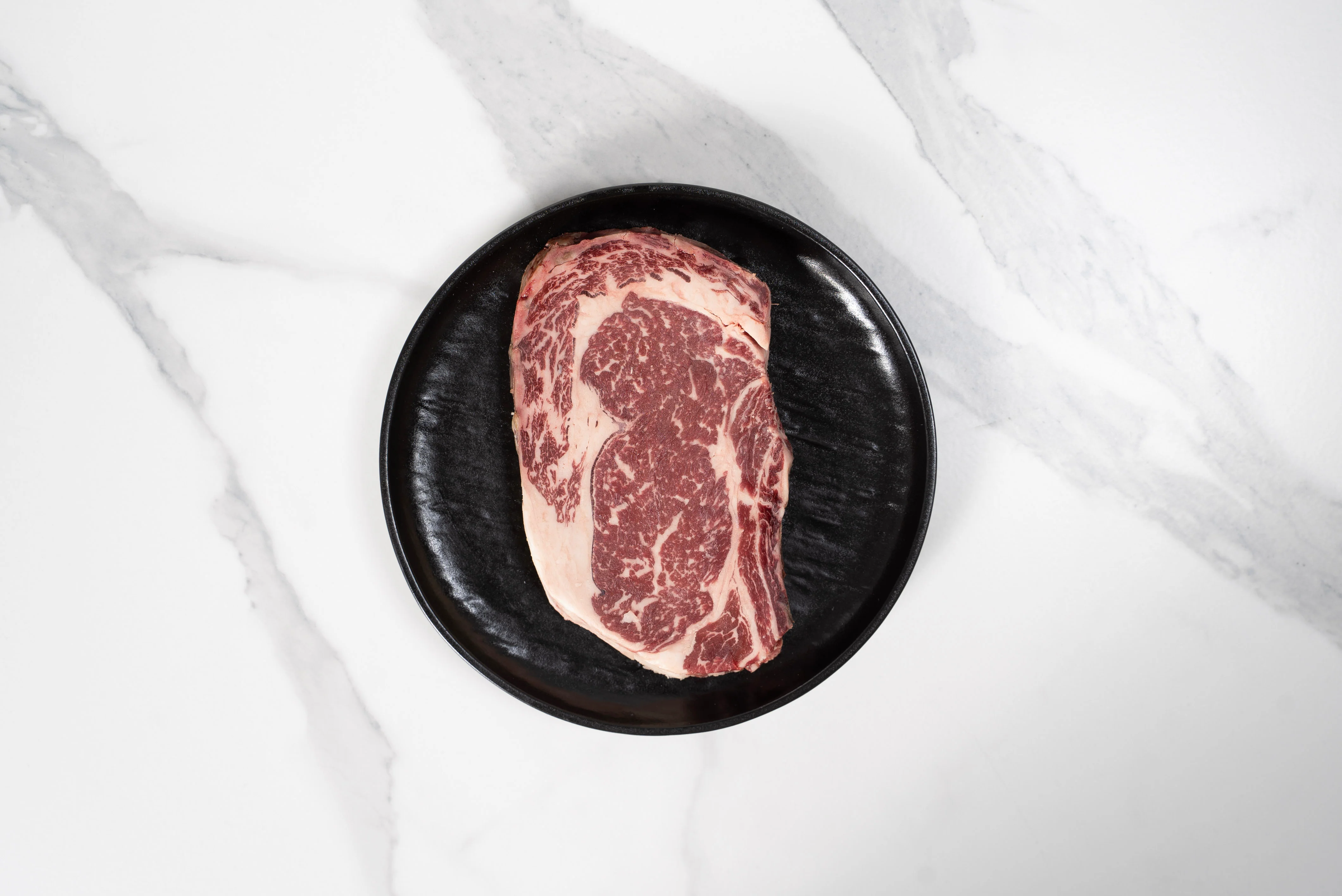
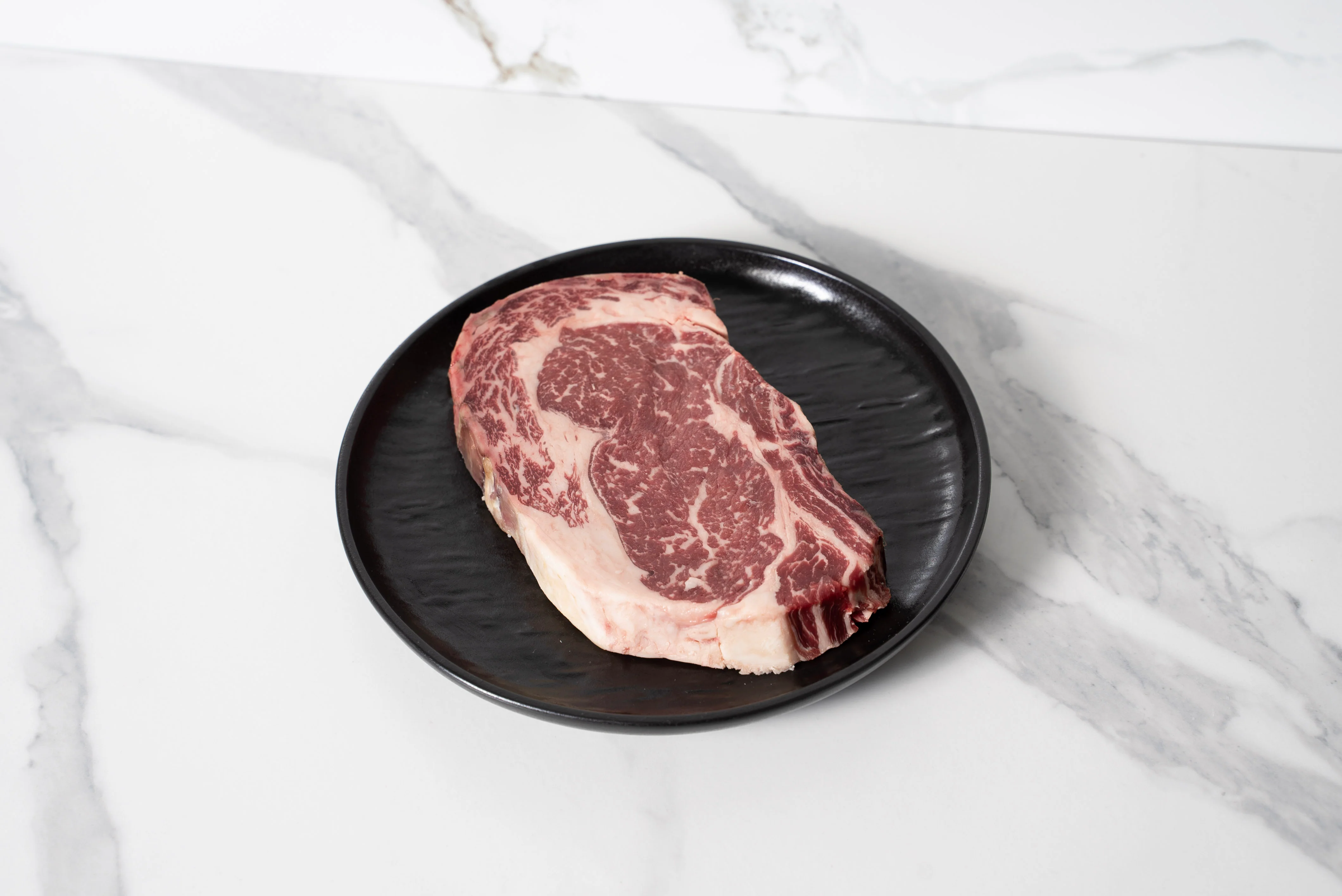
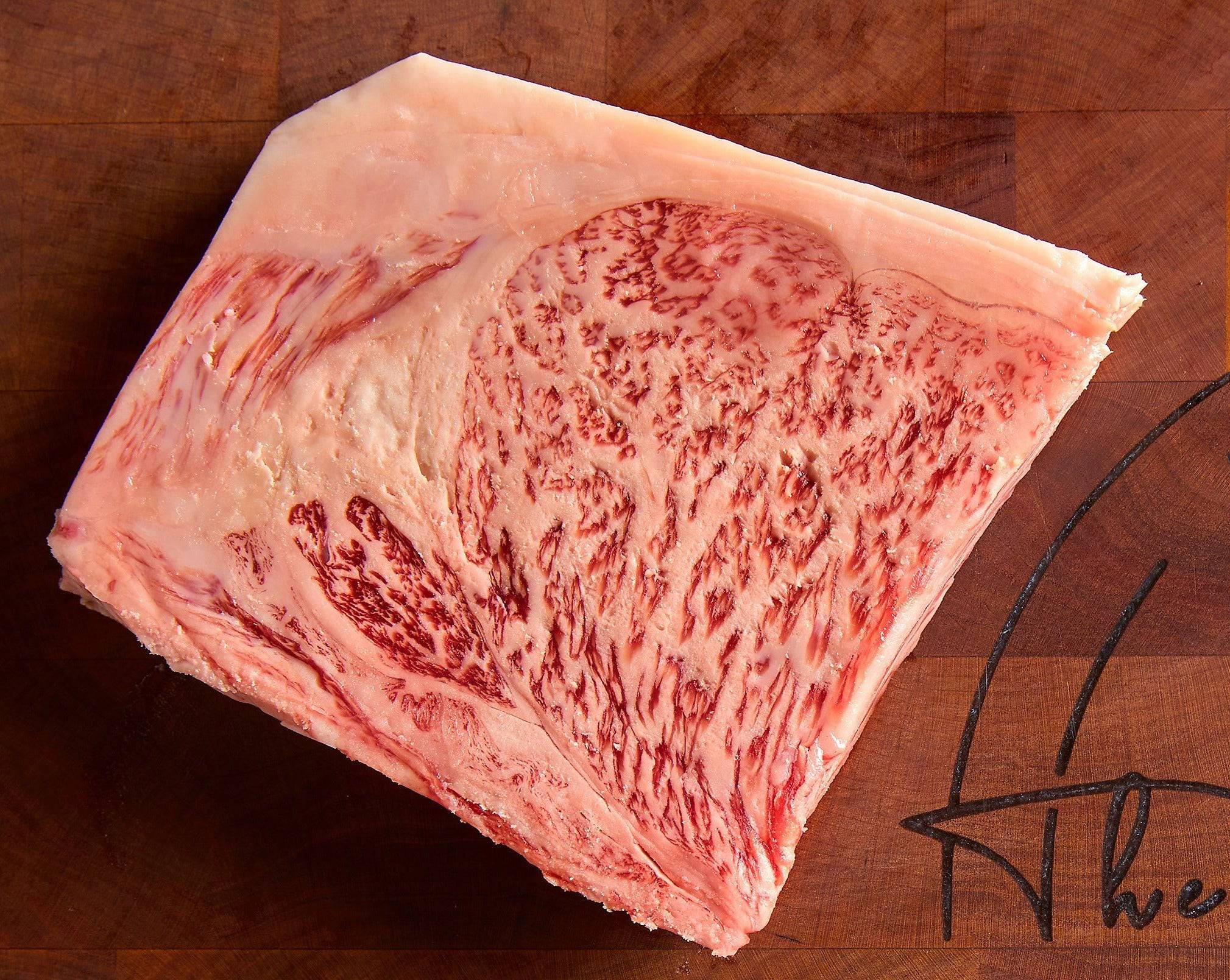
The New York Strip is one of the most technically interesting cuts on the steer — firm enough to hold a hard sear, with intramuscular fat that keeps it juicy and a fat cap that bastes the meat as it cooks. Apply A5 Japanese Wagyu grading at BMS 11+ to that equation and the cut behaves differently: marbling so dense it reads as pattern rather than veining, a melt point that sits below body temperature, and flavor intensity that means an 8–9oz portion satisfies in ways a 16oz Choice strip can't.
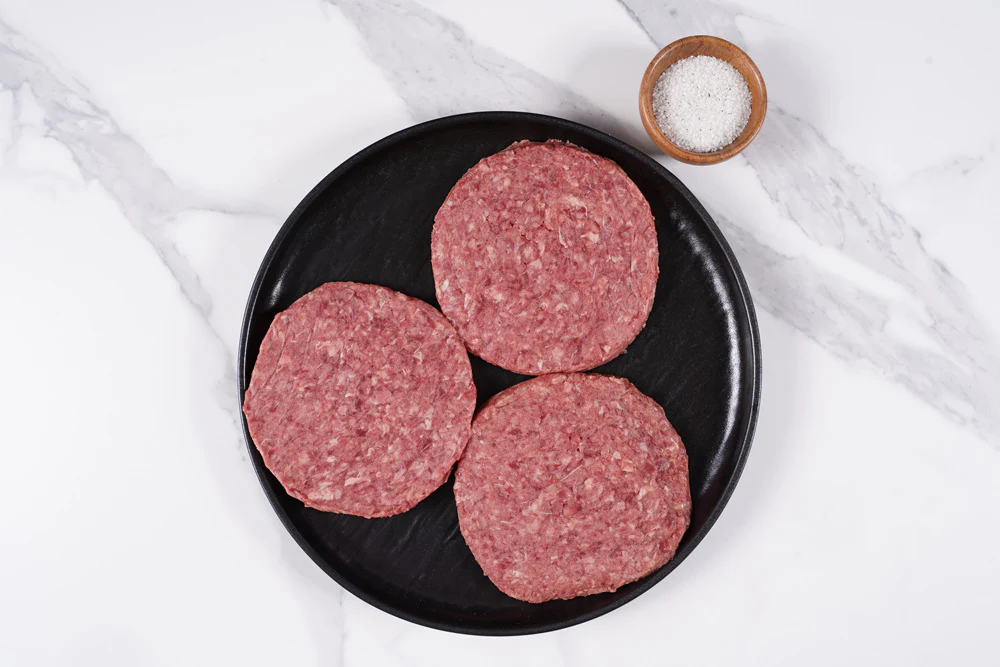
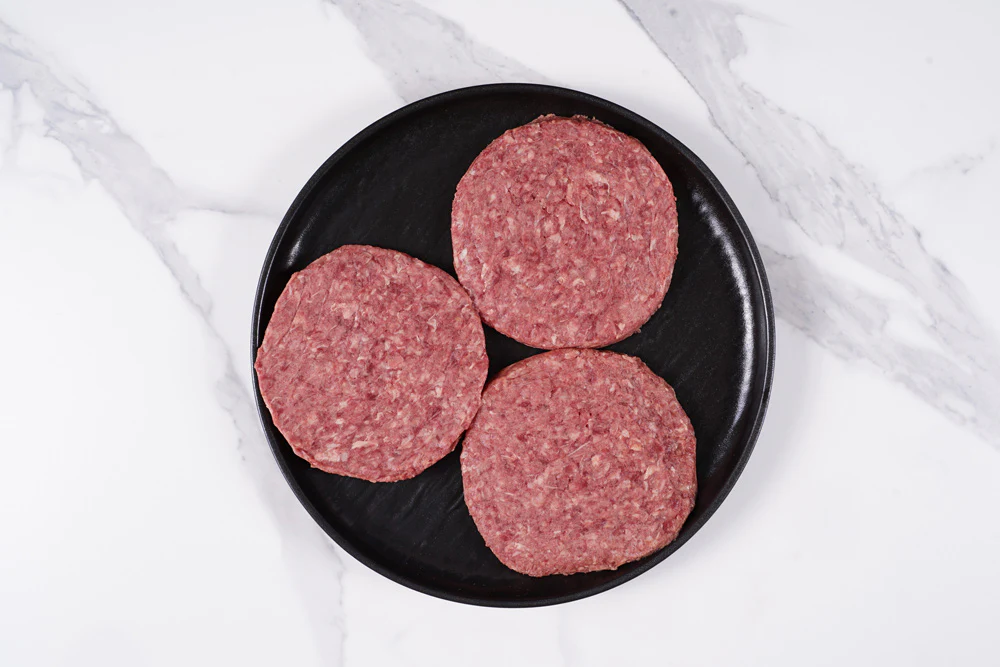
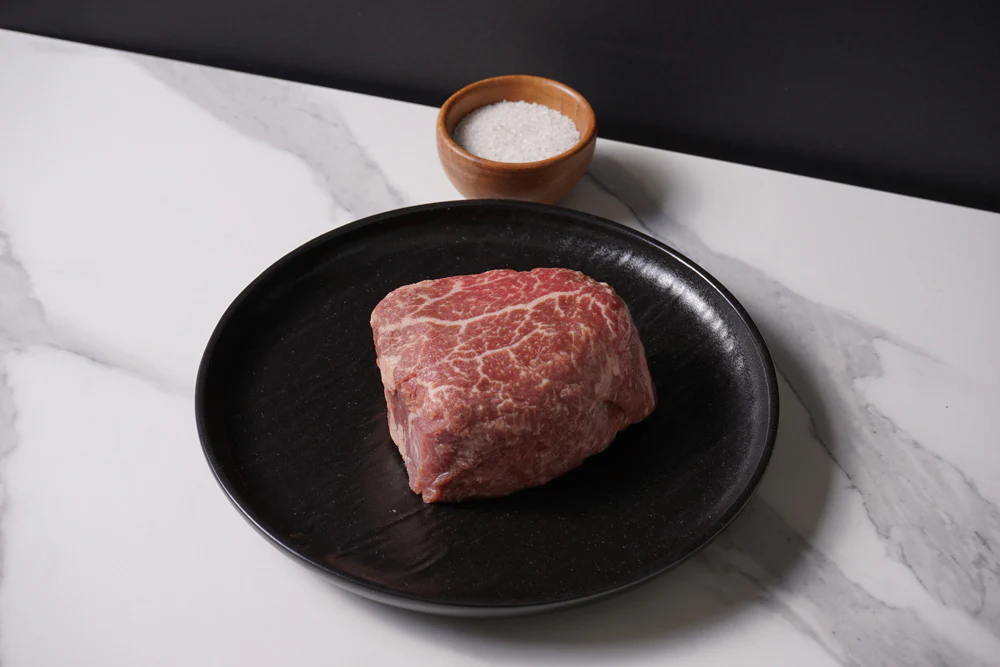
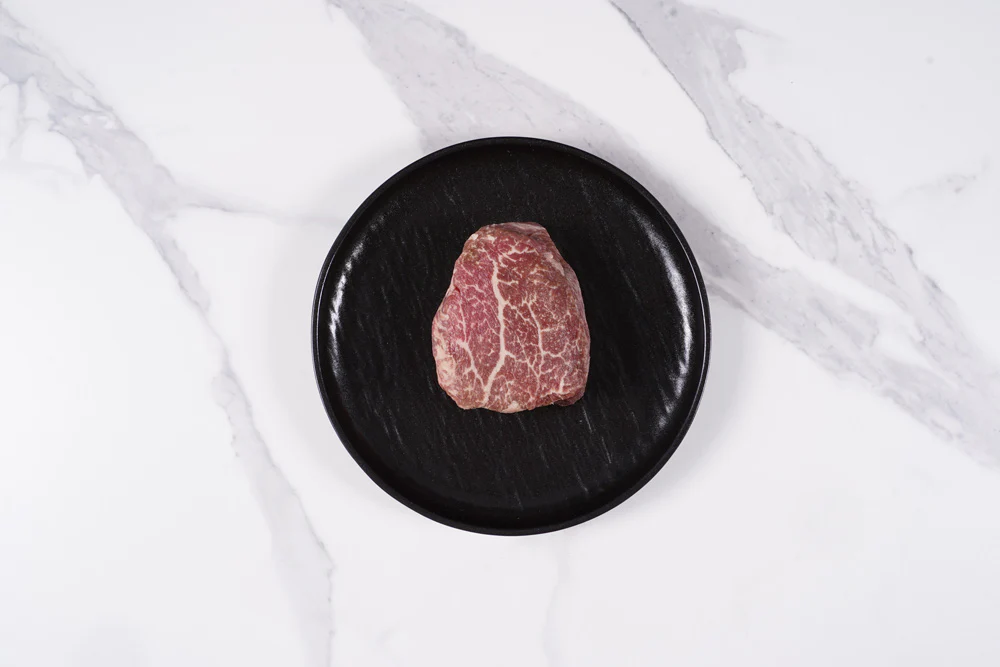
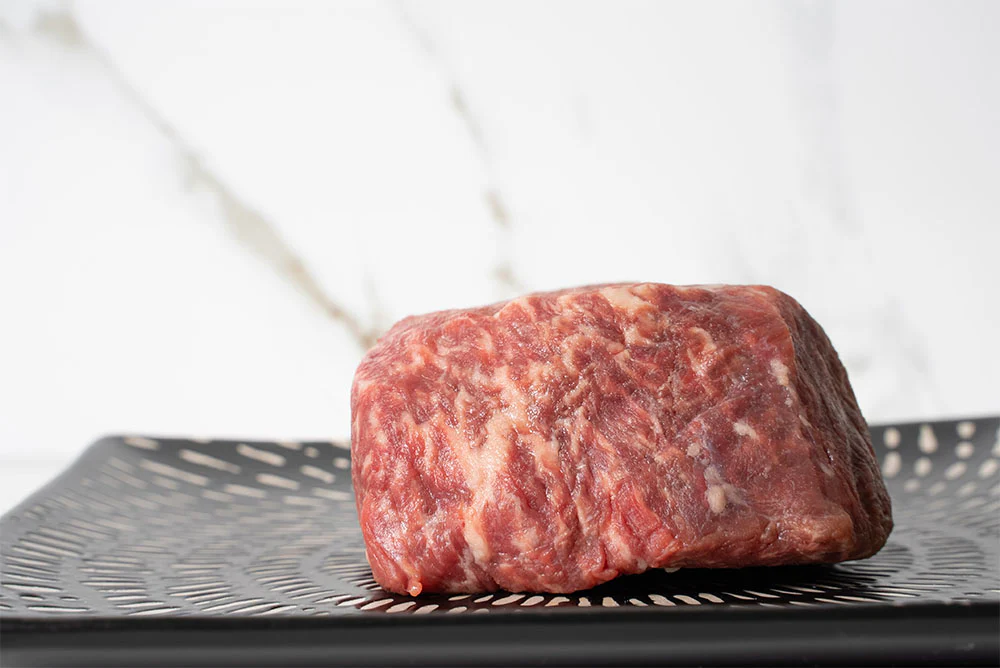
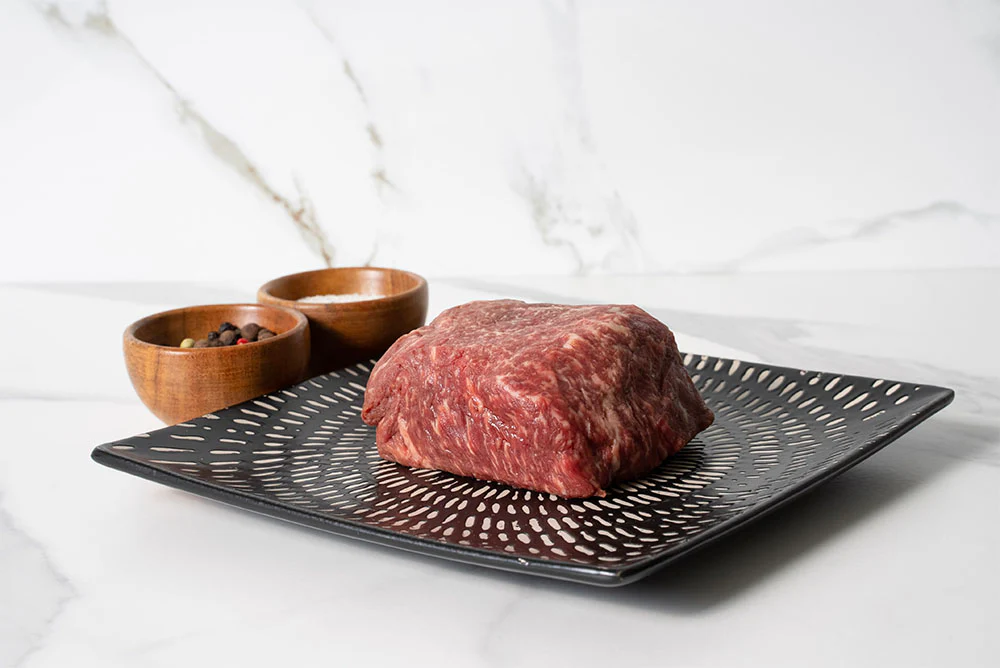
Most A5 New York Strip sold in the US is sliced thin — half-inch, three-quarter at best — because Japan portions for restaurant menus, not American home cooks. The result is a $130 steak that overcooks before the fat renders. Our Block Cut is the opposite. We had our supplier leave the strip in a 2"-thick block — 8–9oz, one portion, four sides to sear, fat that renders all the way through the muscle instead of off the edges.
Why Miyazaki: Miyazaki Prefecture has won Japan's national Wagyu competition — the Zenkoku Wagyu Noryoku Kyoshinkai, informally the Wagyu Olympics — four times, including three consecutive overall championships in 2007, 2012, and 2017. That's a record no other prefecture has matched in the competition's 60-year history. The prefecture sits on the southern island of Kyushu, where humid sub-tropical conditions and mountainous interior elevation slow the cattle's growth and are widely credited with the dense, finely distributed intramuscular fat development Miyagyu is known for.
Why BMS 11+: The Japanese Beef Marbling Standard runs 1 to 12. Most A5 sold in the US tops out at BMS 9. BMS 11 is the second-highest score possible and threads the strip's lean, dense longissimus dorsi muscle finely enough to break the firm texture without losing the steak's structural presence. You still get a steak with bite — not a slab of fat.
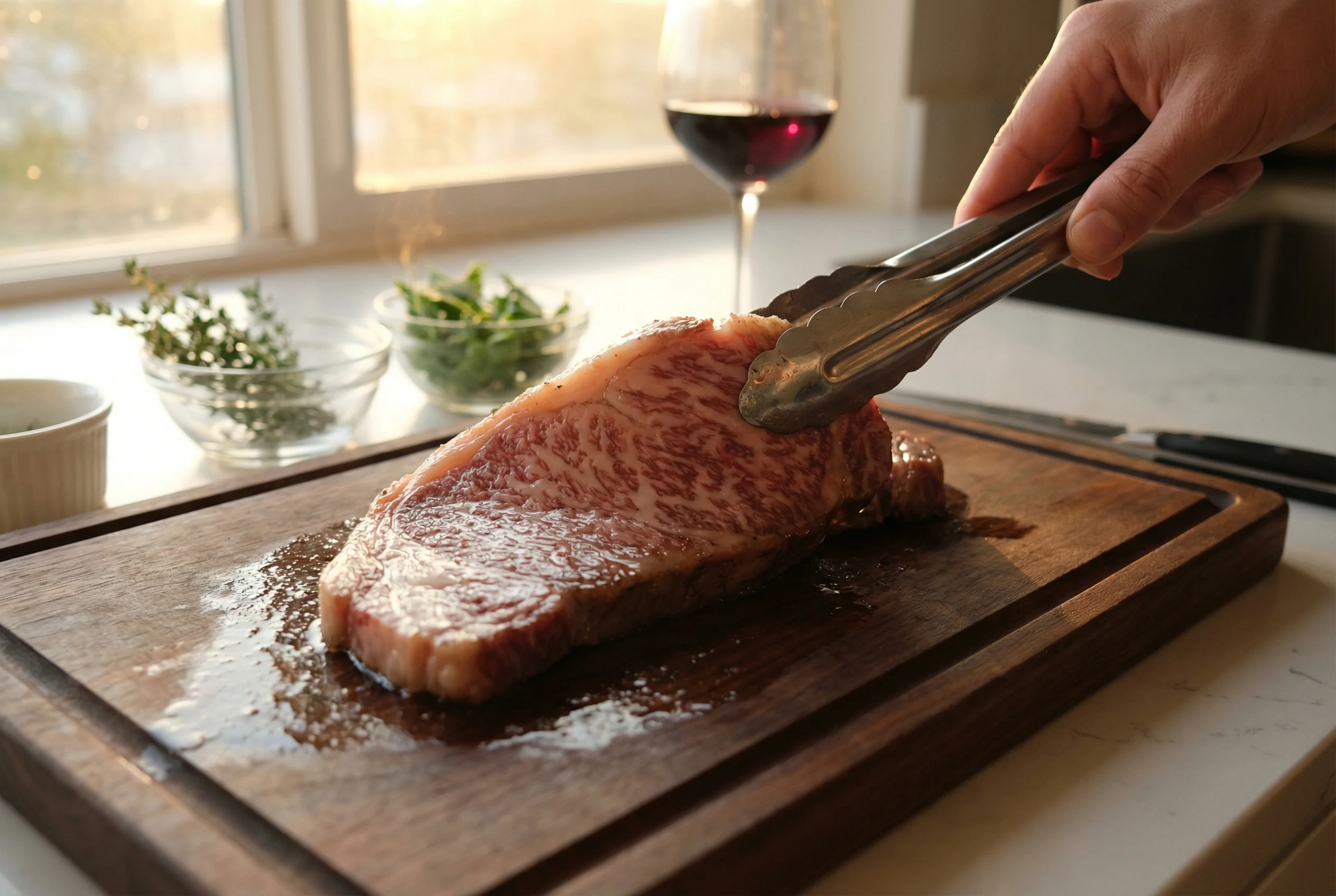
How to cook it: Pull from fridge 45 minutes before cooking. Salt heavy. Cast iron, blazing hot, sear all four sides — 60 seconds per side. Rest 5 minutes. Slice across the short axis to plate as round medallions of marbled cross-section. The cap renders fast at this BMS — pull early, don't push past medium-rare.
Specs:
- Origin: Miyazaki Prefecture, Japan
- Grade: A5 — Japan's highest, verified by the Japan Meat Grading Association (JMGA)
- BMS: 11+ (second-highest possible on the 1–12 Japanese Beef Marbling Standard)
- Weight: 8–9oz
- Format: 2"-thick block, one steak per portion
- Quantity: 1 Steak
Every order ships with a Certificate of Authenticity bearing the individual cow's nose print — Japan's lot-level traceability system. Wagyu noses are like fingerprints, no two alike, and every Wagyu animal in Japan is registered at birth with a 10-digit ID tied to that nose print. The cert that ships with your steak is not generic — it traces to the actual animal.
Free shipping over $195. Arrives perfect or replaced free.
Original: $79.99
-65%$79.99
$28.00Product Information
Product Information
Shipping & Returns
Shipping & Returns
Description
The New York Strip is one of the most technically interesting cuts on the steer — firm enough to hold a hard sear, with intramuscular fat that keeps it juicy and a fat cap that bastes the meat as it cooks. Apply A5 Japanese Wagyu grading at BMS 11+ to that equation and the cut behaves differently: marbling so dense it reads as pattern rather than veining, a melt point that sits below body temperature, and flavor intensity that means an 8–9oz portion satisfies in ways a 16oz Choice strip can't.
Most A5 New York Strip sold in the US is sliced thin — half-inch, three-quarter at best — because Japan portions for restaurant menus, not American home cooks. The result is a $130 steak that overcooks before the fat renders. Our Block Cut is the opposite. We had our supplier leave the strip in a 2"-thick block — 8–9oz, one portion, four sides to sear, fat that renders all the way through the muscle instead of off the edges.
Why Miyazaki: Miyazaki Prefecture has won Japan's national Wagyu competition — the Zenkoku Wagyu Noryoku Kyoshinkai, informally the Wagyu Olympics — four times, including three consecutive overall championships in 2007, 2012, and 2017. That's a record no other prefecture has matched in the competition's 60-year history. The prefecture sits on the southern island of Kyushu, where humid sub-tropical conditions and mountainous interior elevation slow the cattle's growth and are widely credited with the dense, finely distributed intramuscular fat development Miyagyu is known for.
Why BMS 11+: The Japanese Beef Marbling Standard runs 1 to 12. Most A5 sold in the US tops out at BMS 9. BMS 11 is the second-highest score possible and threads the strip's lean, dense longissimus dorsi muscle finely enough to break the firm texture without losing the steak's structural presence. You still get a steak with bite — not a slab of fat.
How to cook it: Pull from fridge 45 minutes before cooking. Salt heavy. Cast iron, blazing hot, sear all four sides — 60 seconds per side. Rest 5 minutes. Slice across the short axis to plate as round medallions of marbled cross-section. The cap renders fast at this BMS — pull early, don't push past medium-rare.
Specs:
- Origin: Miyazaki Prefecture, Japan
- Grade: A5 — Japan's highest, verified by the Japan Meat Grading Association (JMGA)
- BMS: 11+ (second-highest possible on the 1–12 Japanese Beef Marbling Standard)
- Weight: 8–9oz
- Format: 2"-thick block, one steak per portion
- Quantity: 1 Steak
Every order ships with a Certificate of Authenticity bearing the individual cow's nose print — Japan's lot-level traceability system. Wagyu noses are like fingerprints, no two alike, and every Wagyu animal in Japan is registered at birth with a 10-digit ID tied to that nose print. The cert that ships with your steak is not generic — it traces to the actual animal.
Free shipping over $195. Arrives perfect or replaced free.